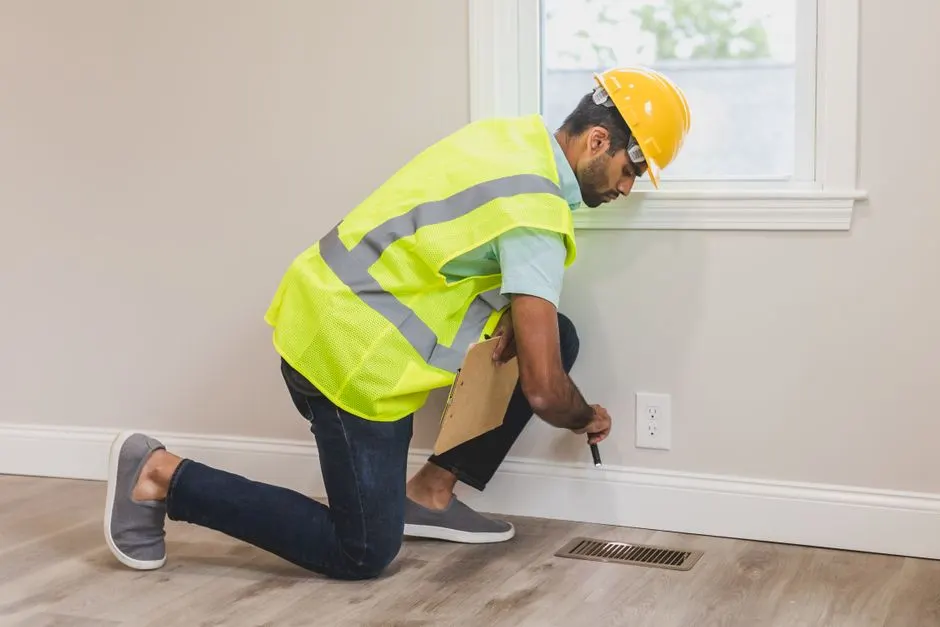
You need a mold inspection if you can see or smell mold but don't know where it's coming from or how far it spreads. You need mold testing if you already know mold is present and need to identify the species - usually for health documentation, a real estate transaction, or an insurance claim. Most Burien homeowners need the inspection first; testing is a targeted follow-up, not a starting point.
We run both services across Burien every week, and the confusion between them costs people money. This post breaks down what each one does, what they cost in 2026, and how to tell which one your situation calls for.
The short answer: inspection finds it, testing identifies it
Mold inspection vs mold testing Burien WA is a distinction between locating a problem and characterizing it. An inspection is a visual and moisture-based investigation of your home - the inspector walks the attic, crawl space, bathrooms, and any room with water history, uses a moisture meter and sometimes a thermal camera, and maps where mold is growing and why. Testing is a lab analysis: someone collects air or surface samples, sends them to an accredited lab, and you get a report listing mold types and spore counts.
Think of it like a doctor's visit. The inspection is the physical exam. Testing is the bloodwork. You don't order bloodwork before the doctor has looked at you.
One more definition worth pinning down: a mold inspection and testing Burien WA service is a combined assessment that includes both the visual investigation and, when warranted, laboratory sampling in a single visit.
What a mold inspection actually covers
A mold inspection in Burien covers every area of the home where moisture collects - not just the spot where you saw discoloration. Our technicians spend 60 to 90 minutes on a typical 1,800-square-foot Burien home, and the crawl space alone can eat 30 of those minutes because that's where the real story usually lives.
Here's what we check on every inspection:
- Moisture readings at walls, ceilings, subfloor, and framing - anything above 16% wood moisture content gets flagged.
- Attic sheathing and rafters, especially the north-facing roof deck where Burien's fall and winter condensation shows up first.
- Crawl space joists, insulation, and vapor barrier - the most common mold location in homes built before 1990.
- Bathroom and kitchen penetrations - under sinks, behind toilets, around tub surrounds, and at the dishwasher supply line.
- HVAC returns and supply registers for visible growth or musty odor.
- Previous water damage - we ask about every leak, flood, or slow drip you can remember.
The inspection report tells you three things: where the mold is, how much of the structure it affects, and what's feeding it. Without that third piece, remediation is a temporary fix. We see this constantly in crawl space mold remediation Burien WA jobs where a homeowner wiped down the joists two winters ago and the growth came right back because the vapor barrier was still torn.
What mold testing actually tells you
Mold testing in Burien Washington tells you what kind of mold is present and at what concentration. That's it - and that's exactly what you need in specific situations.
There are three common sample types:
- Air samples - a calibrated pump pulls a known volume of air across a spore trap. Labs compare indoor counts to an outdoor baseline taken the same day. Results come back in spores per cubic meter.
- Surface samples - tape lift or swab of visible growth. Identifies the species on that specific spot.
- Bulk samples - a piece of drywall, insulation, or wood sent to the lab. Used when you need to know whether a material is salvageable.
Turnaround is typically 2 to 5 business days. Lab fees run $75 to $150 per sample through most Washington labs, and a standard assessment uses 2 to 4 samples.
What testing does not do: it doesn't find hidden mold behind a wall. It doesn't tell you the source. It doesn't tell you how much remediation will cost. If your goal is to solve a mold problem, testing alone leaves you with a report and no plan.
When to get mold inspection in Burien WA
Get a mold inspection in Burien WA when you suspect mold but haven't confirmed it - or when you've confirmed it and need to know the scope. That covers most calls we get.
Book an inspection if any of these sound familiar:
- Musty smell in one room, the basement, or the whole house, with nothing visible.
- A water leak in the last 12 months - even a small one you dried with towels.
- Condensation on windows or pipes every winter.
- You're buying or selling a home and want an independent assessment before closing.
- Someone in the household has new allergy or asthma symptoms that worsen at home.
- You had remediation done elsewhere and want to verify it worked.
Burien's climate drives this. We average around 38 inches of rain a year, most of it between October and April, and homes in the older pockets - near downtown Burien, along Ambaum, and in the Gregory Heights area - were built in the 1940s through 1970s with crawl spaces that were never designed to stay dry. That's why we see so much attic mold removal Burien WA work in January and February: warm interior air hits a cold roof deck, condenses, and feeds growth on the sheathing for three months straight.
When to get mold testing in Burien Washington
Get mold testing in Burien Washington when you need documentation - proof of what's growing and how much. Testing is the right call in four scenarios:
- Health concerns. If a doctor or allergist is involved, species identification matters. Stachybotrys chartarum (black mold), Aspergillus, and Penicillium have different health profiles, and a lab report gives your provider something concrete.
- Real estate transactions. Buyers, sellers, and agents want a third-party lab report, not just an inspector's opinion.
- Insurance claims. Adjusters frequently require spore counts and species ID before approving a remediation payout.
- Post-remediation verification. After cleanup, air samples confirm spore levels have returned to normal. This is the only way to prove the job worked.
If you're dealing with confirmed toxic species, that changes the remediation protocol - containment, negative air pressure, HEPA filtration, and PPE requirements all step up. We handle those jobs through our toxic mold removal Burien WA service, and testing is what triggers that level of response.
Mold inspection and testing cost in Burien WA
Mold inspection and testing cost in Burien WA runs $300 to $600 for a combined inspection-plus-sampling visit in 2026. Here's how that breaks down:
- Standalone inspection: $200 to $400, depending on home size and crawl space access.
- Standalone testing: $150 to $400, driven by sample count. Two samples is standard; four or more is common for larger homes or multi-room concerns.
- Combined inspection and testing: $300 to $600 - the most common package we sell, and usually the best value because the inspector collects samples during the same visit.
- Post-remediation verification: $200 to $350 for air sampling after cleanup.
Remediation itself is a separate cost - most Burien jobs land between $1,500 and $6,500 depending on square footage affected and whether we're pulling drywall, insulation, or subfloor. We give you the inspection findings and a written remediation scope before any of that work starts, so you're never guessing.
One thing worth knowing: some home inspectors offer mold testing as an add-on. The samples are real, but the interpretation is often thin. A dedicated mold assessor knows what a 900-spore-per-cubic-meter Cladosporium count means in a Burien crawl space versus a Bellevue basement. That context is the whole point.
Common mistakes homeowners make
The most expensive mistake we see is skipping the inspection and going straight to testing. You spend $300 on a lab report, learn you have Penicillium, and still don't know where it's coming from or how to get rid of it.
Other patterns worth avoiding:
- Bleaching visible mold and calling it done. Bleach kills surface growth on non-porous materials but doesn't penetrate drywall, wood, or insulation. The roots stay, the moisture source stays, and the mold returns in weeks.
- Trusting a DIY air test kit. The $40 petri dish kits sold online don't control for volume, don't include an outdoor baseline, and can't be compared to any professional standard. Labs won't accept them for insurance or real estate purposes.
- Testing before fixing the water source. If you have an active leak, no amount of testing or remediation will hold. Fix the water first.
- Assuming no visible mold means no mold. Roughly 40% of the mold jobs we run in Burien start with a smell and no visible growth. It's behind the drywall, under the flooring, or inside the wall cavity.
- Using a remediation company that also does the assessment. This is a conflict of interest in some states and a bad idea everywhere. The assessment should be independent of the company bidding the cleanup.
When to call a professional
Call a professional when the affected area is larger than about 10 square feet, when you smell mold but can't see it, when there's been a leak or flood in the last year, or when anyone in the home has unexplained respiratory symptoms. Those are the four triggers that separate a DIY wipe-down from a real assessment.
Small spots on a bathroom tile grout line? Clean it with a detergent solution, fix the ventilation, and monitor. Anything bigger, hidden, or recurring needs eyes on it. Our team at MoldGuard Remediation runs inspections and testing across Burien and the surrounding south King County area, and we'll tell you straight whether you need remediation or just a dehumidifier and better exhaust fan.
Frequently Asked Questions
Do I need mold inspection or mold testing in Burien WA?
Start with an inspection if you can see or smell mold but don't know the source or extent. Add testing if you need species identification for health, real estate, or insurance reasons. Most homeowners need the inspection first; testing is a targeted follow-up.
What is the difference between mold inspection and testing in Burien Washington?
An inspection is a visual and moisture investigation that locates mold and identifies the water source. Testing is laboratory analysis of air or surface samples that identifies mold species and spore counts. Inspection answers "where and why"; testing answers "what kind and how much."
How much does mold testing cost in Burien WA?
Standalone mold testing in Burien runs $150 to $400 in 2026, depending on sample count. A combined inspection and testing visit costs $300 to $600 and is usually the better value because samples are collected during the same appointment.
Can mold inspection find hidden mold in Burien?
Yes. A professional inspection uses moisture meters and thermal imaging to detect elevated moisture behind walls, under floors, and in crawl spaces - the conditions where hidden mold grows. Visible confirmation may require a small access cut, which we discuss with you first.
Who does mold inspection and testing in Burien?
MoldGuard Remediation provides both services across Burien and south King County. We inspect, collect samples when needed, and interpret results in the context of your specific home - then give you a written remediation scope if work is required.
Get help with Mold Remediation in Burien
If you're not sure whether you need an inspection, testing, or both, call us and describe what you're seeing or smelling. We'll tell you which service fits - and if you don't need either, we'll say so.
Call MoldGuard Remediation at 1112222333 to schedule a mold inspection or testing visit in Burien.